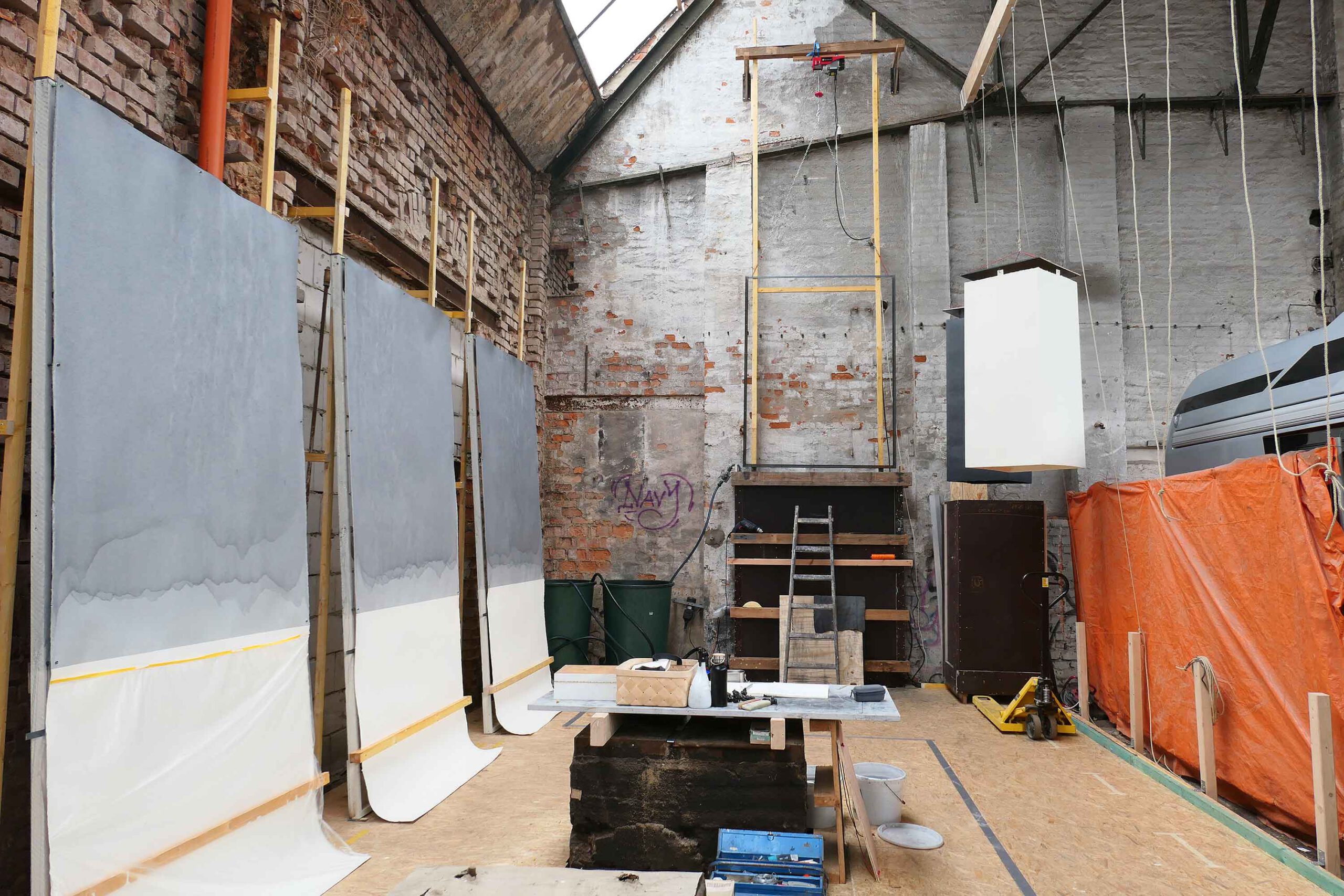
dip
this sheet of paper
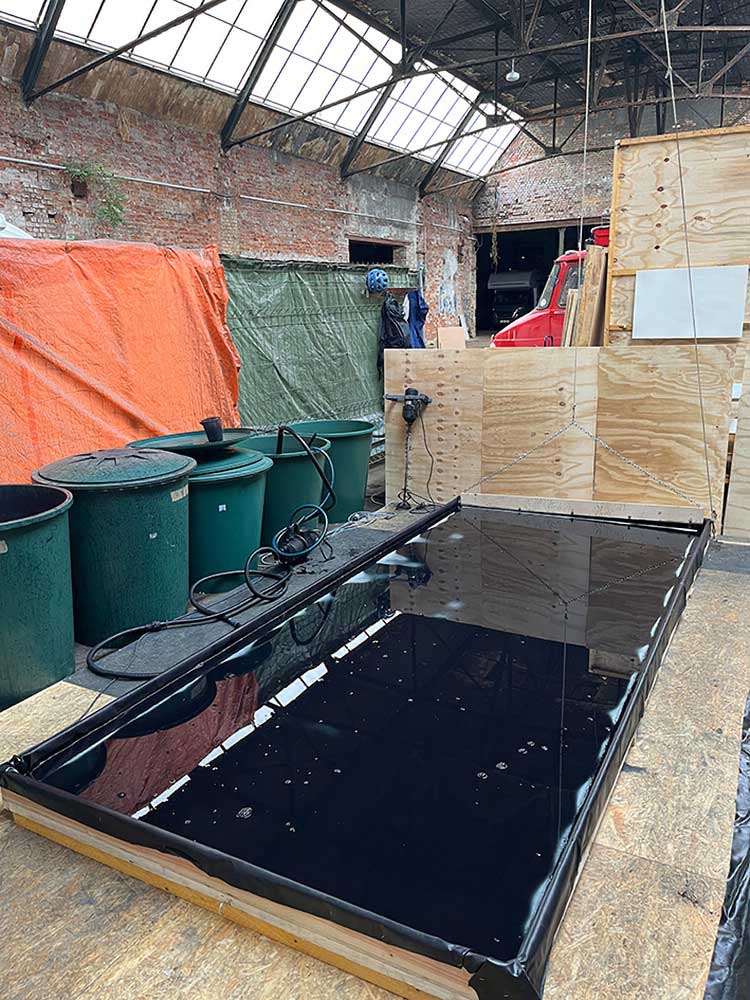
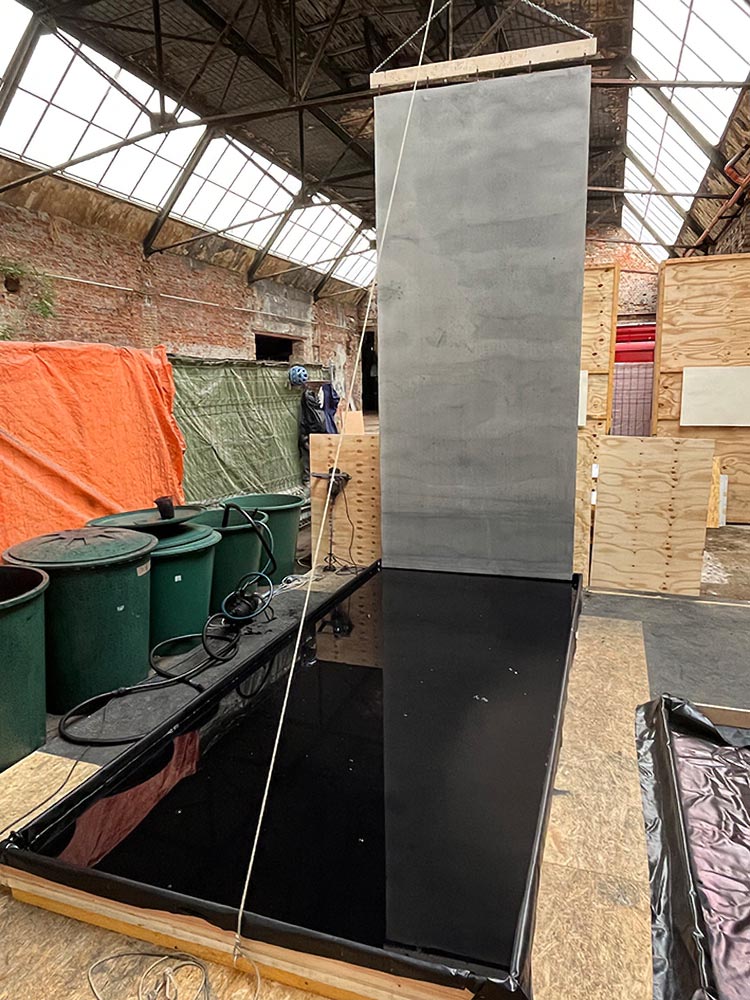
into black water
again and again
until
this sheet of paper
darkens no further
as simple
perhaps
clear enigmas
perhaps as simple—
a key to reality—
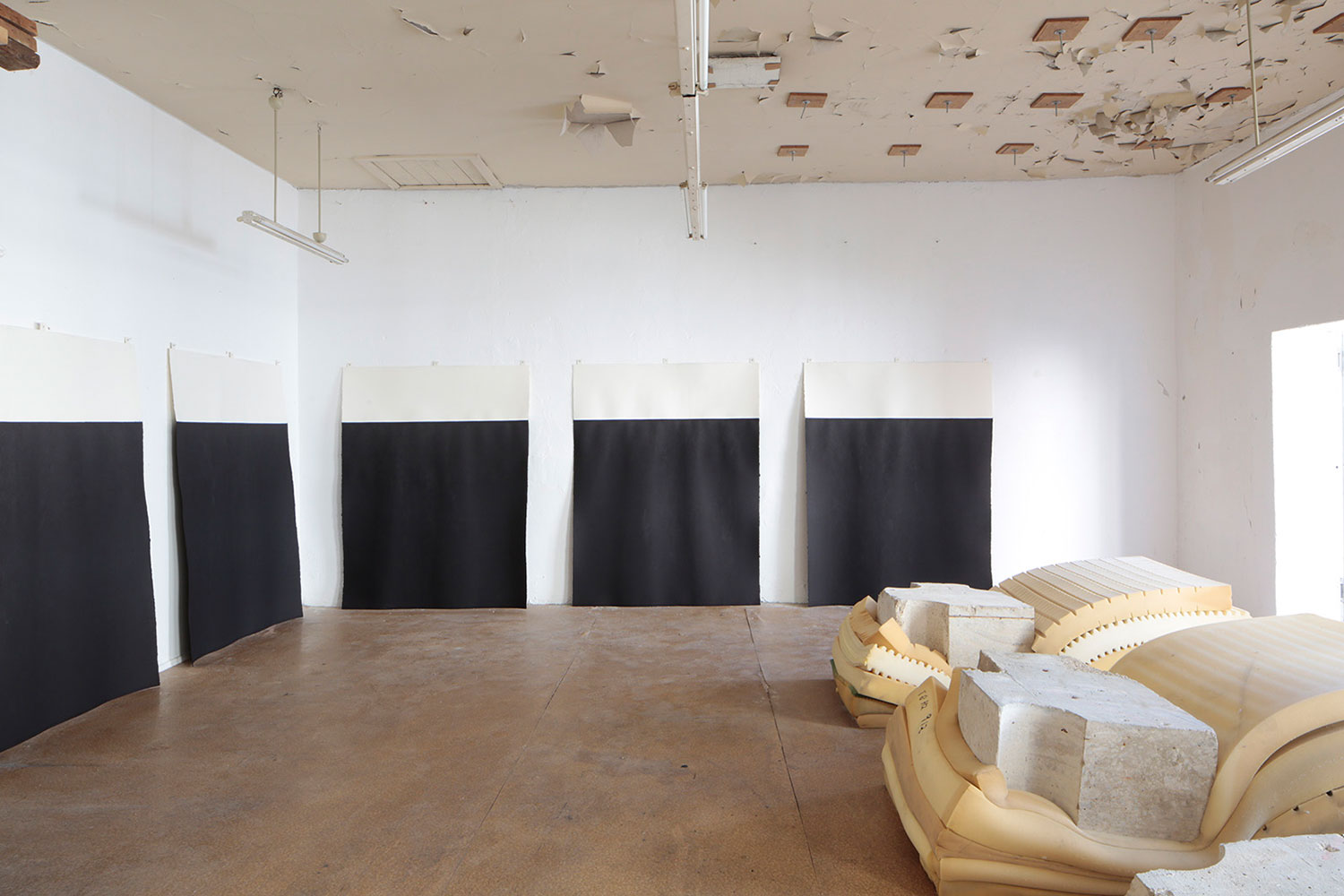
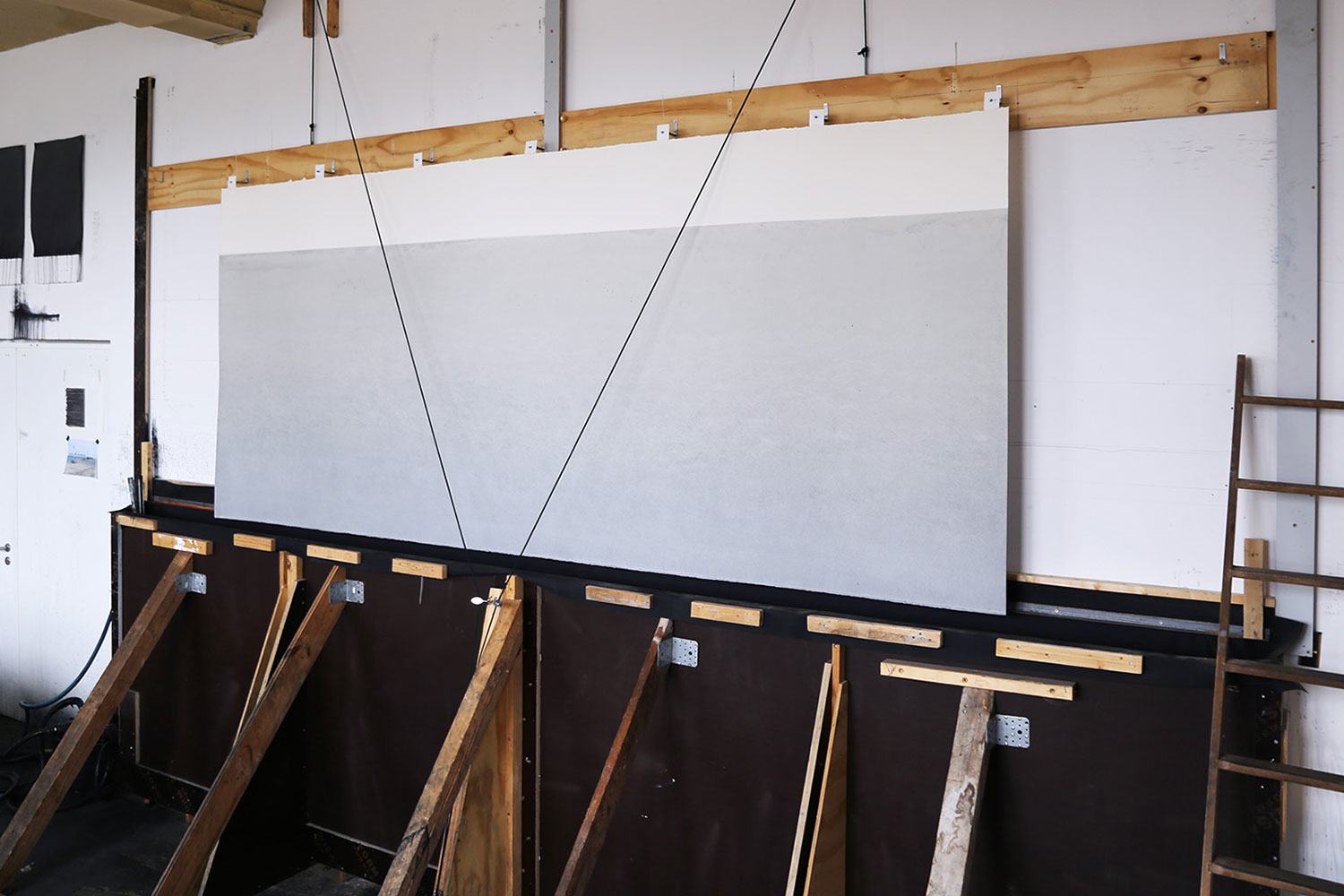
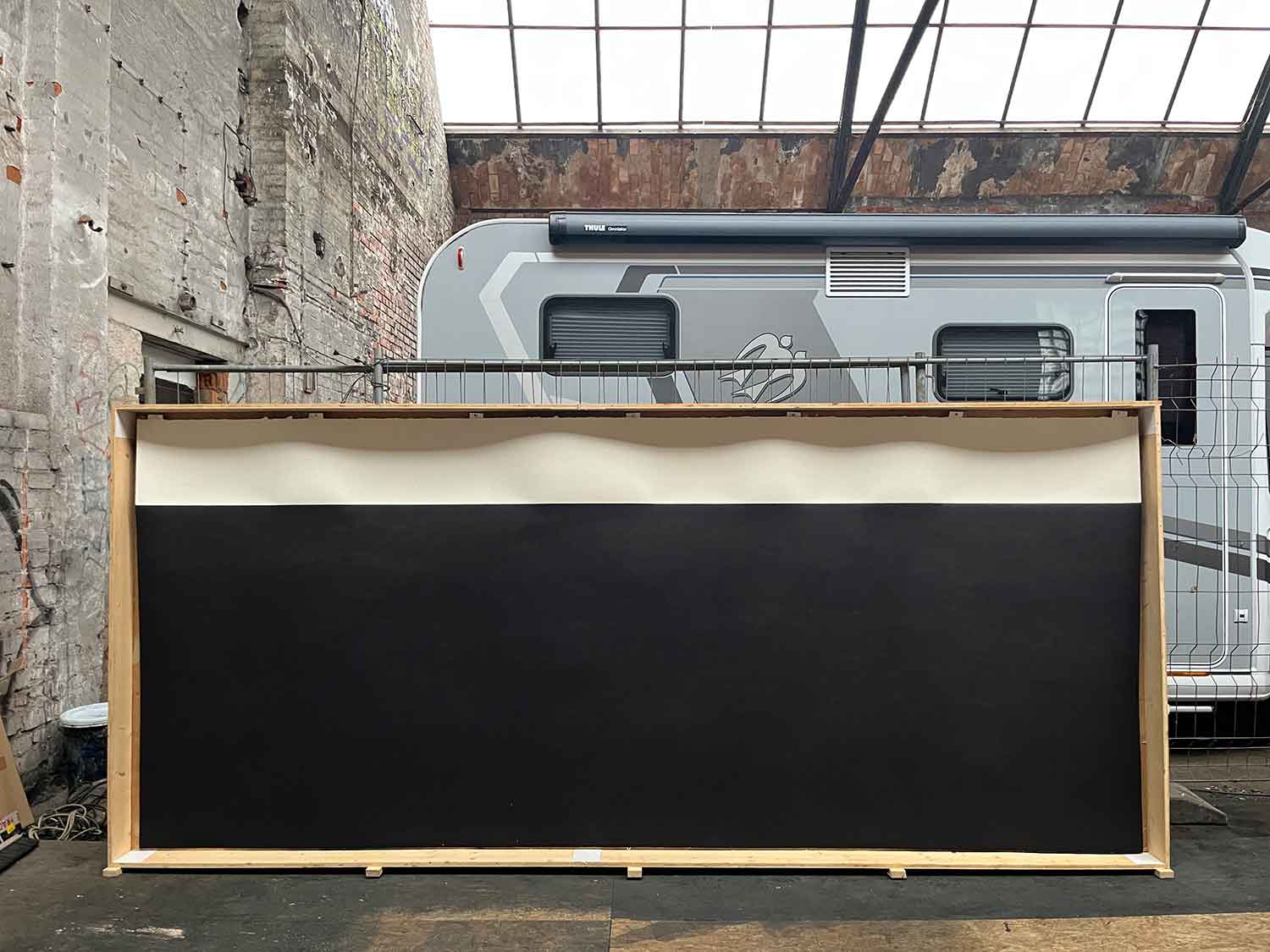
A black surface in front of me, with its dimensions,
its materiality, darkness, its relationship to the wall and the room,
facing me—physically and mentally.
The rich black holds a question of depth and time.
knowing that this black is the result and fulfilment of necessarily
many repetitions of soaking in fluid watercolour and drying;
these dimensions are revealed without explanation
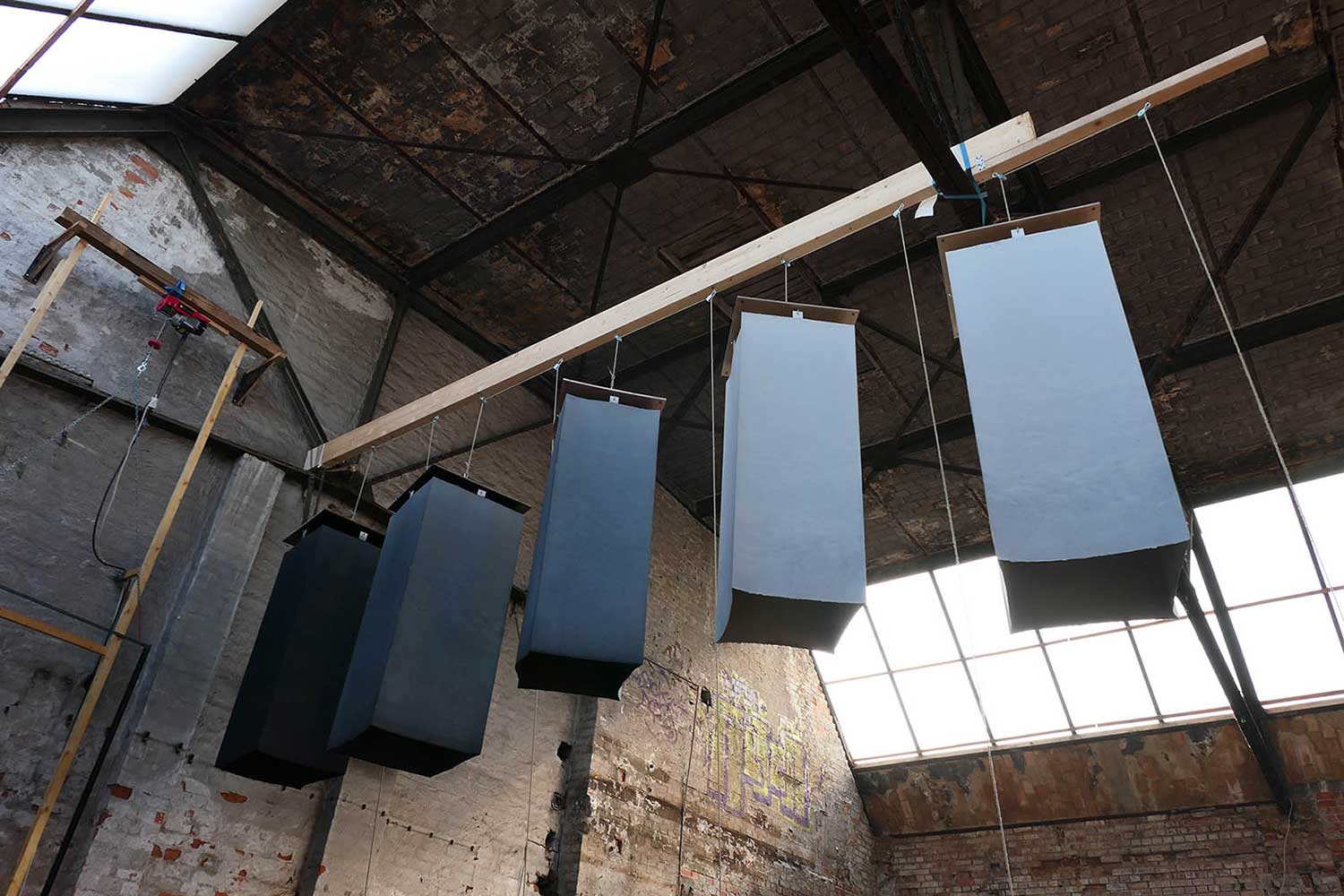
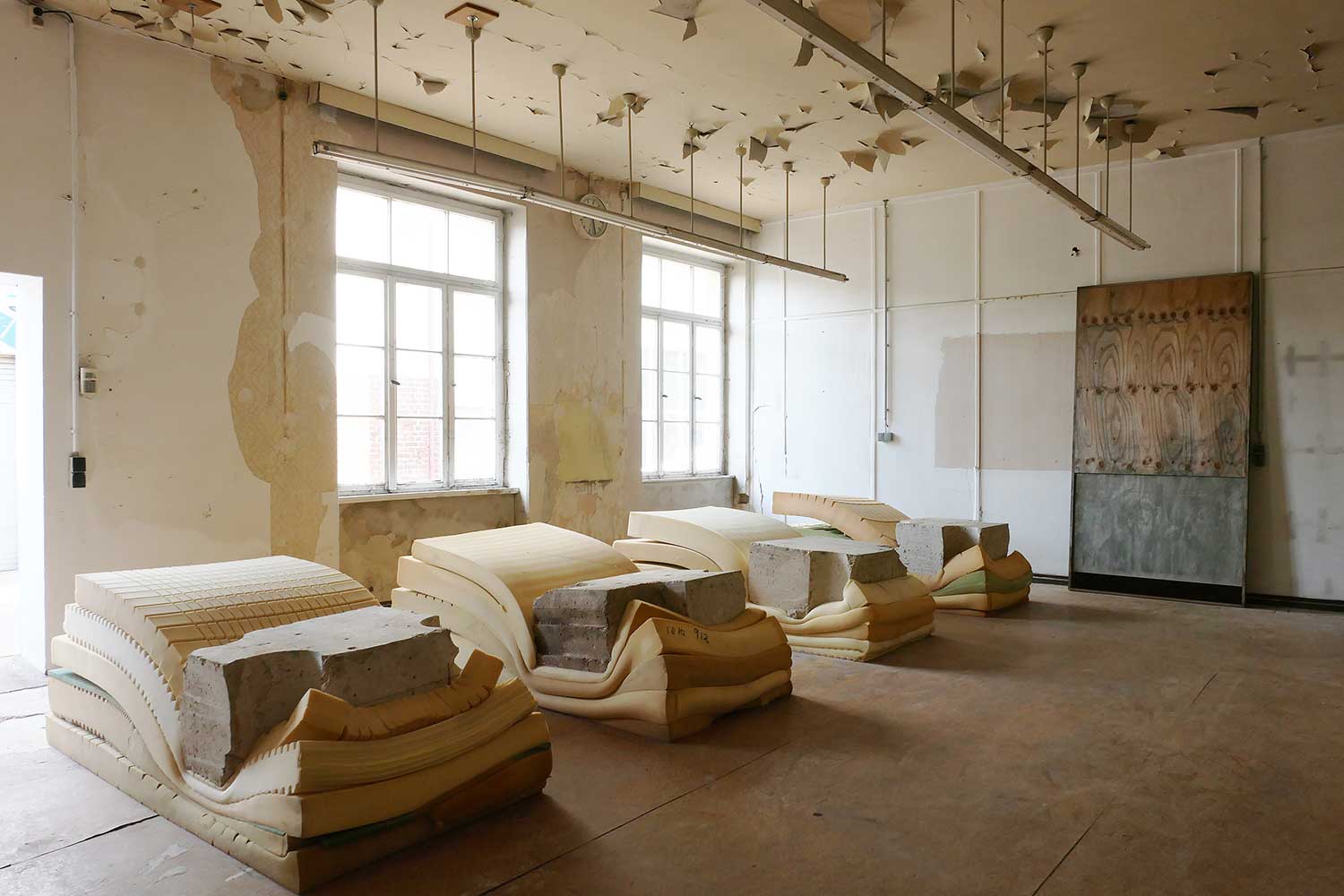
Bodies in space.
Shaped according the nature of their material, these forms
interact in a simple yet tense relationship.
The form of mass in a basic, fundamental order.
as simple
Albert Camus for Sisyphus:
‘One must imagine the artist Andreas Johnen as a lucky person.’
taucht
diesen Bogen Papier
in schwarzes Wasser
immer wieder
so oft bis
dieser Bogen Papier nicht
mehr dunkler wird
so einfach
vielleicht
klare Rätsel
vielleicht so einfach-
ein Schlüssel zur Wirklichkeit-
Eine schwarze Fläche vor mir in ihren Maßen, ihrer Stofflichkeit,
Dunkelheit, Verhältnis zur Wand und zum Raum,
mir gegenüber- körperlich und geistig.
Das satte Schwarz birgt eine Frage nach Tiefe und Zeit.
Weiss ich, daß dieses Schwarz Ergebnis und Erfüllung notwendig vieler
Wiederholungen von eintauchen in flüssige Aquarellfarbe und trocknen ist,
öffnen sich diese Dimensionen ohne erklärt zu sein.
Körper im Raum.
Gemäß des Wesens ihres Materials geformt sind sie in schlichter und
gespannter Beziehung zueinander. Formgestalt von Masse in einfacher,
prinzipieller Ordnung.
so einfach
Albert Camus für Sisyphos:
„Man muß sich den Künstler Andreas Johnen als glücklichen Menschen vorstellen.“
Text by Enzo Link
Artist in Residence
Fondation CAB, Brussels
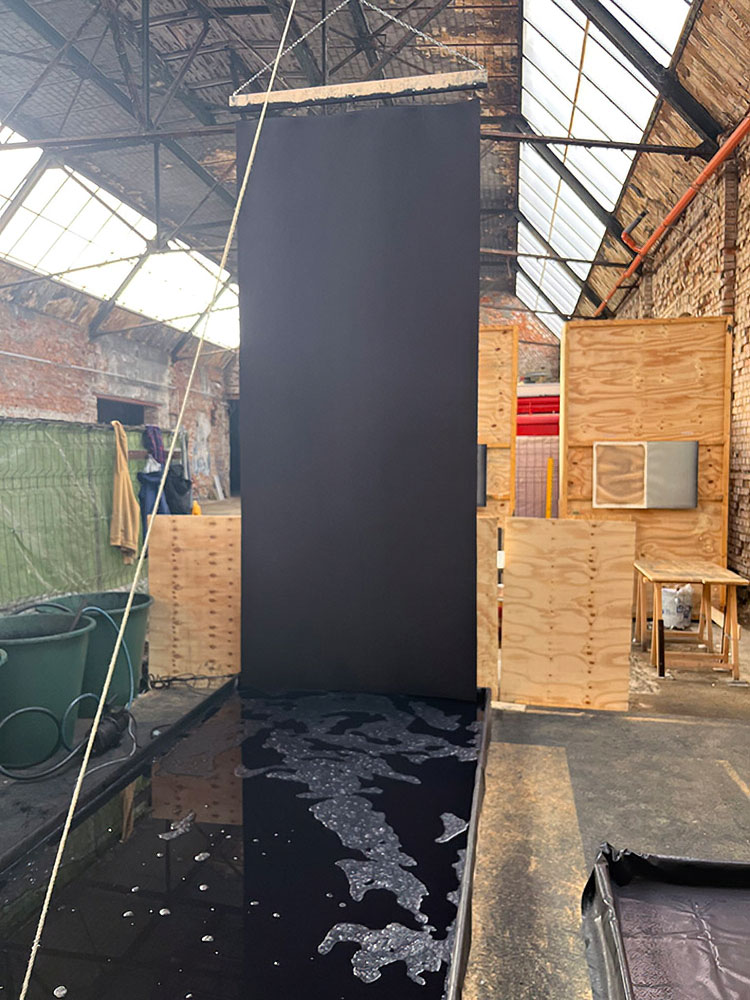
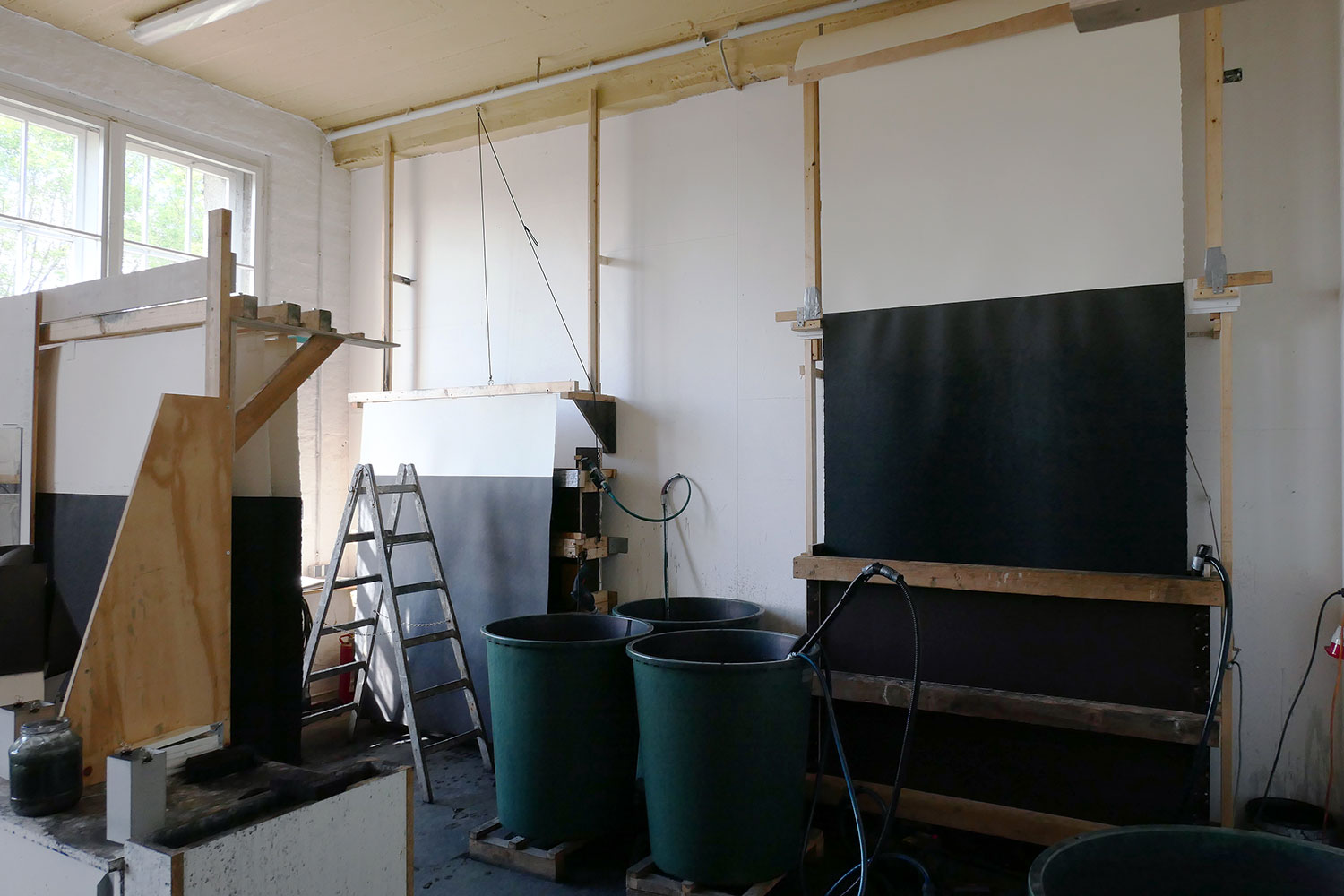
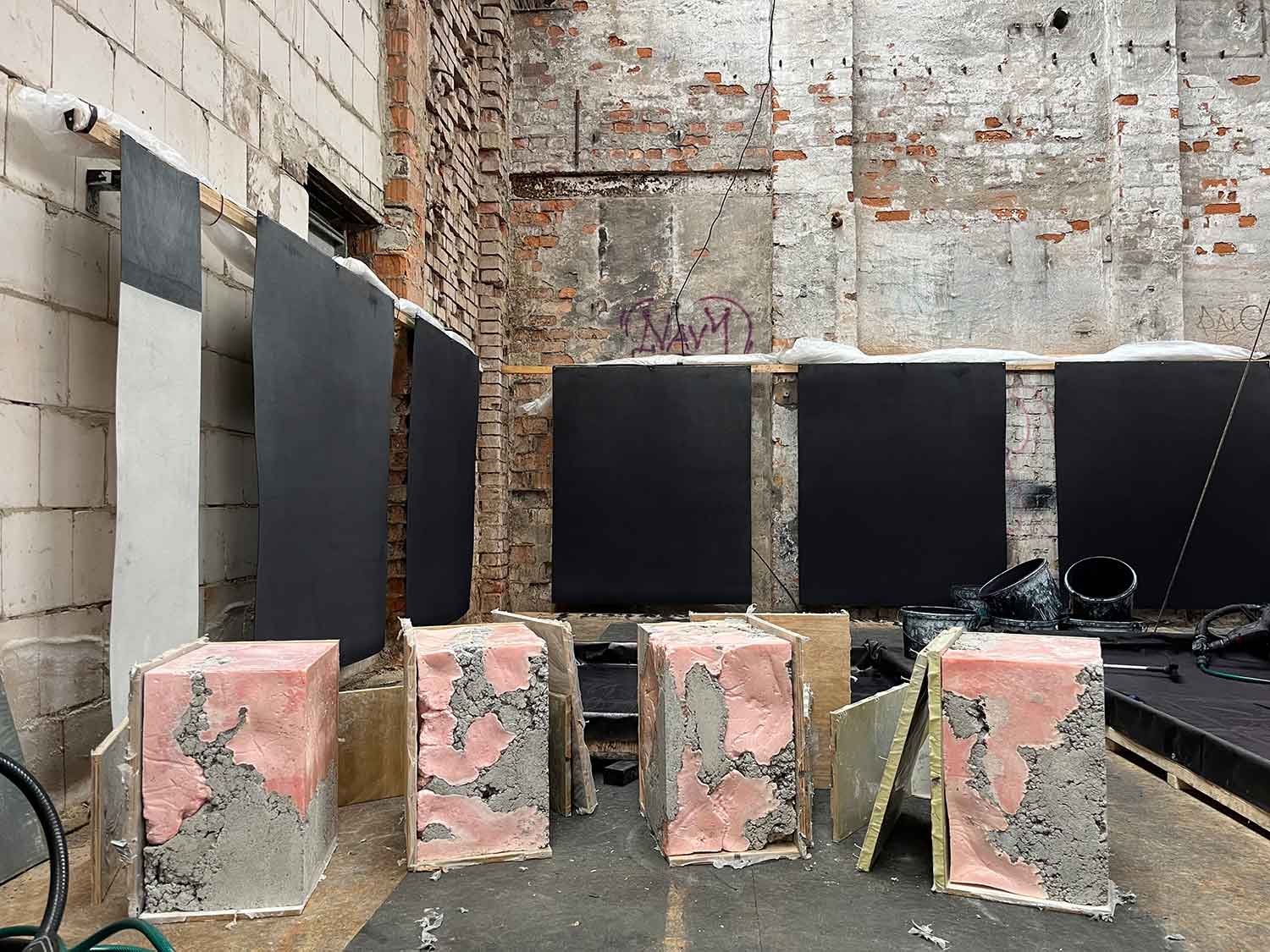
In his practice Andreas uses different methods to saturate paper with colour. He simply applies the paint until the paper can hold no more. Making large, multi-part watercolors, Johnen tapes the paper horizontally to wooden plates and pours paint onto its surface two liters at a time, repeating the procedure up to 120 times. The paper comes to life, swells and convulses under the color as they merge. Although seemingly similar, these monochromes each have a life of their own – and one not just determined by the method that brought them into being, but by the material characteristics of each colour pigment, given time and space to breathe.